

InTucker Magazine
April 2026
Ten Weeks of Momentum: A Progress Report on the New Era in Tucker
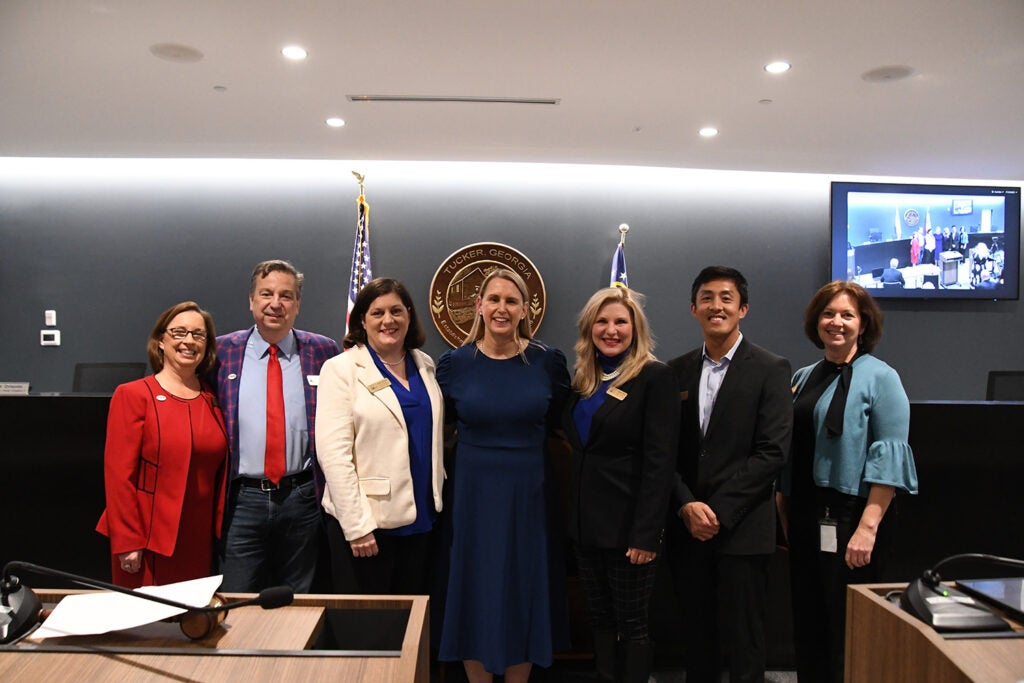
Ten weeks ago, a new chapter began for the City of Tucker. Since that first day, the pace has been relentless, marked by ten ribbon cuttings and a Team Tucker spirit, comprising both City Council and staff, that has worked nonstop to capture the momentum of this transition. While the city faces significant opportunities and the inevitable hard work of governance, the first quarter has been defined by a clear focus on collaboration, infrastructure, and a deep commitment to transparency.
The progress of the last ten weeks is a result of the specialized focus of the City Council members, each leading vital initiatives for the city’s future:
- Mayor Pro Tem Virginia Rece has been active with the National League of Cities, collaborating with Congressman Johnson and Senators Ossoff and Warnock. These efforts have already paid dividends, securing $850,000 for a multi-use path linking Hugh Howell to the South Fork Peachtree Creek Greenway.
- Councilman Roger Orlando has focused on comprehensive crime briefings and bringing stakeholders together to address the community’s concerns regarding street racing. He is also supporting and advising on a new ordinance regarding roadside animal sales and backyard breeders to ensure higher standards of animal welfare.
- Councilwoman Cara Schroeder is working closely with the Friends of Tucker Parks and the Tucker Parks and Recreation Department. Tucker is currently exploring a potential parks bond referendum to ensure our recreational spaces meet the needs of a growing population.
- Councilman Vinh Nguyen is championing a vision that looks beyond the car. By focusing on Tucker Trails and neighborhood walkability, he is bringing a vital multi-generational perspective to how we move through our city.
- Councilwoman Alexis Weaver was recently appointed to the DeKalb County Housing Working Group. By hosting the DeKalb Housing Roundtable in Tucker, she has ensured our city remains at the forefront of the regional conversation on housing affordability and development.
- Councilwoman Amy Trocchi has been working with Tucker’s Community Development Department and the Tucker Northlake CID to support and promote public art in Tucker. The Tucker Northlake CID just announced approval of a $75,000 public art fund. With an initial $50,000 allocation and ongoing funding from CID revenue, Tucker is poised to become a destination for public art and cultural expression. Councilwoman Trocchi liaises on behalf of the City with the DeKalb Arts Council and the United Sports Council.
One of the more significant changes involves the structure of City Council meetings. By designating the second meeting of each month as a dedicated Work Session, the Council has created a space specifically for sharing ideas, asking deep-dive questions, and discussing agenda items with more nuance before they reach a final vote.
Furthermore, in a move to ensure the public is part of the process from the beginning, public comment has been added to the start of these work sessions. This ensures that resident input informs the discussion.
This structural change is underpinned by a City of Civility resolution passed during the first council meeting of Mayor Lerner’s term. In Tucker, civility is viewed as much more than simple politeness. It is a commitment to disagree without disrespect, to seek common ground even in times of deep disagreement, and to listen past preconceptions. Because of Georgia’s Sunshine Laws, which require all official conversations to happen in the open, this culture of civility is practiced in full view of the public, ensuring a government that is as respectful as it is transparent.
Following two intensive Council retreats facilitated by the Carl Vinson Institute, the administration has arrived at an empowering realization: the City does not necessarily have a money problem, but a priority problem.
With federal funding sources like ARPA and the initial infrastructure bill winding down, the reality is that the more Tucker achieves, the more is expected. To manage this, the administration is focusing on a Capital Improvement Plan. This means learning to say no to projects that don’t offer a high Return on Investment (ROI) and prioritizing initiatives that bring long-term impact over short-term flair.
The City Council is currently refining its vision, mission, and
values. These are not just fluff statements; they are the filters through which every budgetary and policy decision will be made.
A primary goal of the first ten weeks has been making City Hall more accessible to everyone. To that end, meetings for the Development Authority, Planning Commission, and Zoning Board of Appeals are once again available online. While there are still kinks to work out with technology like closed captioning, the commitment to digital access remains firm.
The Mayor’s goal is to use accessibility as a filter for everything the City does, ensuring that no residents are barred from participation due to a disability. Additionally, the city is actively pursuing the City of Ethics certification through the Georgia Municipal Association (GMA) to further codify its commitment to integrity.
Finally, City staff are developing a comprehensive Public Participation Plan, modeled after the Atlanta Regional Commission (ARC) standards. This plan ensures that outreach is consistent across all departments and projects. Whether it is a project on Rosser Road or a Master Plan for Henderson Park, Tucker is committed to better signage, mailers for neighbors, and reporting back on concerns, even when no immediate action is possible.
The Mayor and Council are making a concerted effort to expand the circle of engagement, reaching out to new stakeholder groups to ensure they aren’t just hearing from the same ten people.
The first ten weeks in Tucker have been a sprint, but the race is a marathon. What has been established in this short window is a culture of intentionality. By valuing civility, prioritizing infrastructure maintenance, and viewing every city action through the lens of accessibility, the current leadership is moving beyond the what of city government and focusing on the how.
The true success of these first ten weeks lies in the realization that a city is not just a collection of roads and parks, but a shared agreement between neighbors to build something lasting. With a clear mission and a unified Council, Tucker is not just planning for the next quarter, it is building a legacy of stewardship that will serve residents for decades to come.